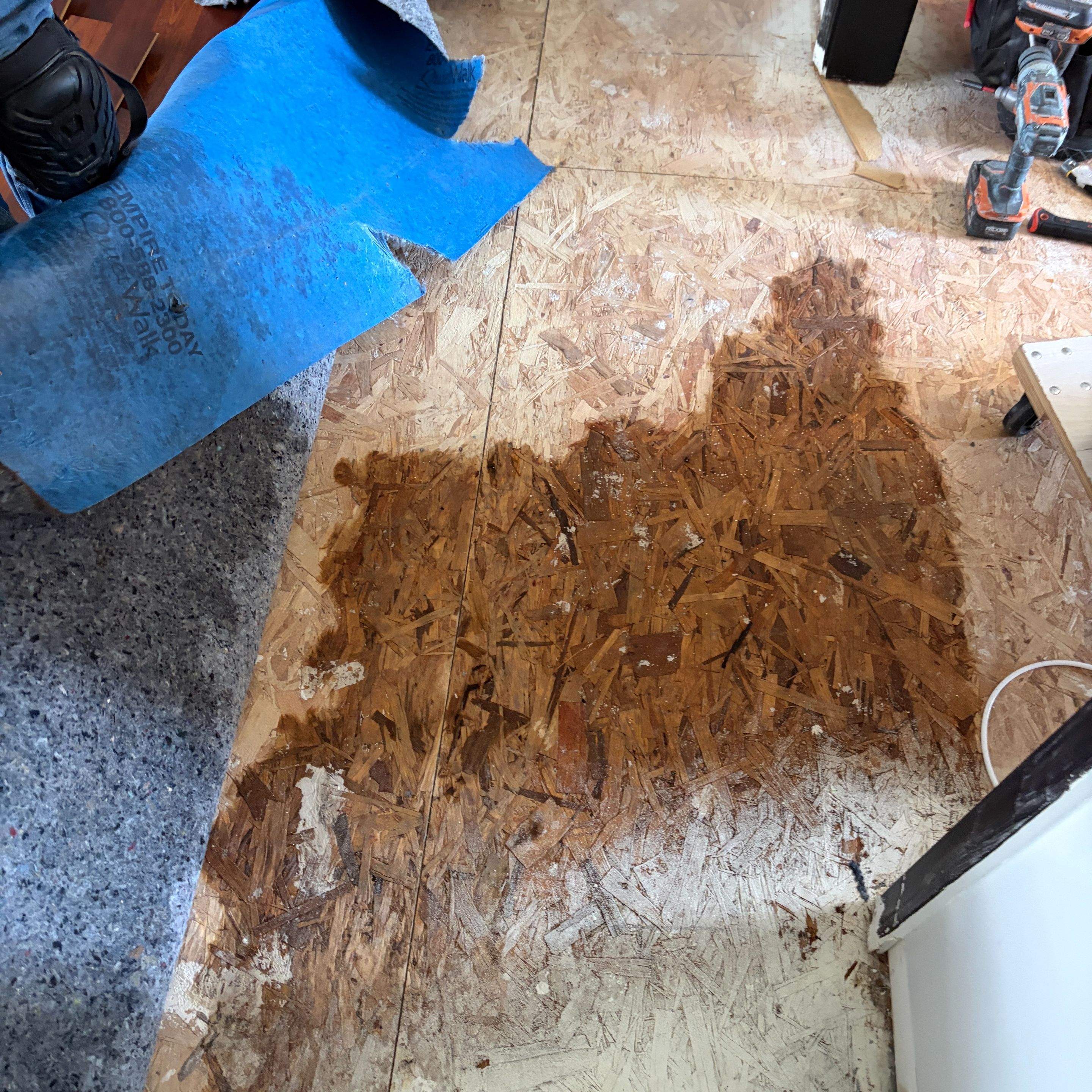
Problem: Water Is Still Spreading While You Read This
Every minute the water sits, it travels further. It wicks up drywall at roughly half an inch per hour, slips under vinyl plank flooring, and runs along floor joists to rooms you have not even checked yet. In a Brookstone home with an upstairs laundry, the ceiling below is often the first casualty.
Solution: Shut It Down and Map the Spread
Start with the shutoff valves behind the washer. If they are stuck, close the main water supply to the house. Unplug the machine only if you can do so without standing in water. Then do a quick walkthrough on the floor below and in adjacent rooms. Touch baseboards, look at ceiling seams, and check inside any cabinet that shares a wall with the laundry area. Take photos of everything before you move a single item. Insurance adjusters in Indiana routinely ask for time stamped images, and your claim moves faster when you have them ready.
Problem: Standing Water Looks Manageable but Is Not
Most homeowners underestimate how much water is hiding. The puddle you see is maybe 20 percent of the total. The rest is inside the wall cavity, under the flooring, and absorbed into the pad beneath your carpet. A wet vac can only pull surface water. It cannot reach the saturated insulation that will mold within 48 to 72 hours.
Solution: Professional Extraction With the Right Equipment
Truck mounted extractors pull water at rates a shop vac cannot match, and weighted extraction tools press water out of carpet pad without tearing it up. Our crews use moisture meters and thermal imaging to find the boundary between wet and dry materials, which is rarely where your eye says it is. A typical washing machine supply line releases 5 to 7 gallons per minute until shut off, so a flood that runs for 20 minutes while you are out of the house can put 100 gallons or more into your floor system. That volume saturates everything it touches and demands more than a household vacuum can deliver. If you want a deeper look at the process and equipment involved, our overview of water extraction services and standing water removal covers what to expect on site.
Problem: The Water May Not Be as Clean as You Think
A supply line burst is usually Category 1, meaning clean water. A drain hose failure or an overflow during the wash cycle is Category 2, which contains detergent, dirt, fabric fibers, and bacteria. Category 2 water becomes Category 3 after 48 hours of sitting at room temperature. That distinction matters because Category 2 and 3 water requires removal of porous materials like carpet pad, drywall, and insulation, not just drying.
Solution: Categorize Before You Decide What to Save
An IICRC certified technician will identify the category on arrival and document it for your insurance claim. The category drives the entire scope of work. Trying to dry contaminated materials in place is how mold problems start, and how claims get denied later when an adjuster sees that protocols were skipped. For deeper background on cost factors, our water damage restoration cost breakdown explains how category affects pricing.
Problem: Drying the Surface Is Not the Same as Drying the Structure
You can run box fans for a week and still have 18 percent moisture content in your subfloor. Wood is considered dry at 12 to 15 percent in most Brookstone homes. Anything above that range invites mold, warping, and adhesive failure in flooring.
Solution: Controlled Drying With Daily Monitoring
Professional drying uses three tools working together:
- High velocity air movers positioned to create directed airflow across wet surfaces.
- Commercial dehumidifiers sized to the cubic footage of the affected area, typically pulling 70 to 130 pints per day.
- Daily moisture readings logged at the same reference points to confirm progress.
Most washing machine floods reach drying goals in 3 to 5 days. Floods that traveled through ceilings or into framed walls can take 5 to 7 days. We do not pack up equipment until the numbers say the structure is dry.
Problem: Hidden Damage Behind Walls and Under Cabinets
The laundry room is one of the worst places for a flood because it is usually packed tight against finished walls, base cabinets, and trim. Water finds the path of least resistance, which is almost always behind something you cannot see. Particle board cabinet bases swell and crumble within a day or two of contact. Baseboards trap moisture against drywall and create a slow drying pocket that mold loves.
Solution: Targeted Inspection and Strategic Removal
Our technicians pull cove base, drill small inspection holes in toe kicks, and remove a few inches of drywall at the bottom of affected walls when the readings call for it. These cuts are made cleanly so the rebuild is straightforward. Removing the bottom 16 inches of drywall, often called a flood cut, lets air movers reach the wall cavity and dries insulation faster than waiting for moisture to migrate out through the surface. It is less invasive than it sounds and saves the rest of the wall.
Problem: Insurance Claims Get Denied or Underpaid
Homeowners policies in Indiana typically cover sudden and accidental water damage from a washing machine, but they exclude gradual leaks and poor maintenance. Adjusters look for evidence that the homeowner acted quickly and used a qualified contractor. Vague invoices and missing moisture logs are a fast path to a partial denial.
Solution: Documentation From the First Hour
Here is what protects your claim:
- Photos and video of the standing water, the failed hose or component, and every affected room.
- A written scope of work from an IICRC certified restoration company with category and class identified.
- Daily moisture readings and equipment logs through the drying period.
Brookstone Water Restoration provides all of this as part of standard service, and we communicate directly with your adjuster when you want us to. We have seen claims approved in days when the paperwork is tight, and we have seen identical losses sit in dispute for weeks when it is not. If you are weighing your options on who to call, our guide on how to choose a water damage company covers the questions that matter most.